

For World AIDS Day Josh Borja, Senior Project Officer in ASHM’s National Policy and Education Division and Convenor of PANA (Positive Asian Network Australia), shares a reflection on his year working in the HIV sector.
World AIDS Day is an annual reminder that progress in HIV care is measured not only in biomedical outcomes, but in the lived realities of the people behind them. This year’s theme, “No one left behind,” demands that we confront – directly and without softening – the systems, attitudes, and structures that still create inequity for people living with HIV.
Across the past year, I’ve been fortunate to contribute to work that pushes our sector toward greater honesty and accountability of person-centred practice. At the New Zealand Nurse Study Days and HIV Update Seminar, the sessions were led by an incredible team made mostly of New Zealand Infectious Diseases and Sexual Health nurses. They created a space where clinicians engaged deeply and respectfully – and importantly welcomed my experience as a person living with HIV into the conversation.
Sharing my journey with Cabenuva, a treatment that is not available in Aotearoa (even my previous tablet regimen is not available there!) was more than personal storytelling; it was a reminder that treatment decisions are shaped by real lives, not theoretical case studies. I centred the presentation on the idea that long-acting injectable treatment won’t suit everyone, but it should always be offered as an option for those who want it. Ensuring real choice in treatment keeps patient-centred care at the heart of every decision, and having access to different treatment methods empowers people to choose the option that best fits their lives. The willingness of clinicians to listen and sit enthralled demonstrated the power of human experience and open dialogue to create meaningful change.
ASHM’s work with Health Equity Matters in training peers for contact tracing reinforced another truth: HIV doesn’t enter people’s lives gently. Stigma, especially self-stigma, is present at the exact moment of diagnosis for many people, shaping someone’s connection to care from day one. Using a creative piece about my own diagnosis described as having “unsettling clarity” grounded the training in reality, not theory. It showed that sometimes clinics can get it wrong and that sometimes peers may be talking to someone with a similar experience. This highlights the power of peer-led approaches, especially for those who feel unsafe or unseen in clinical settings.
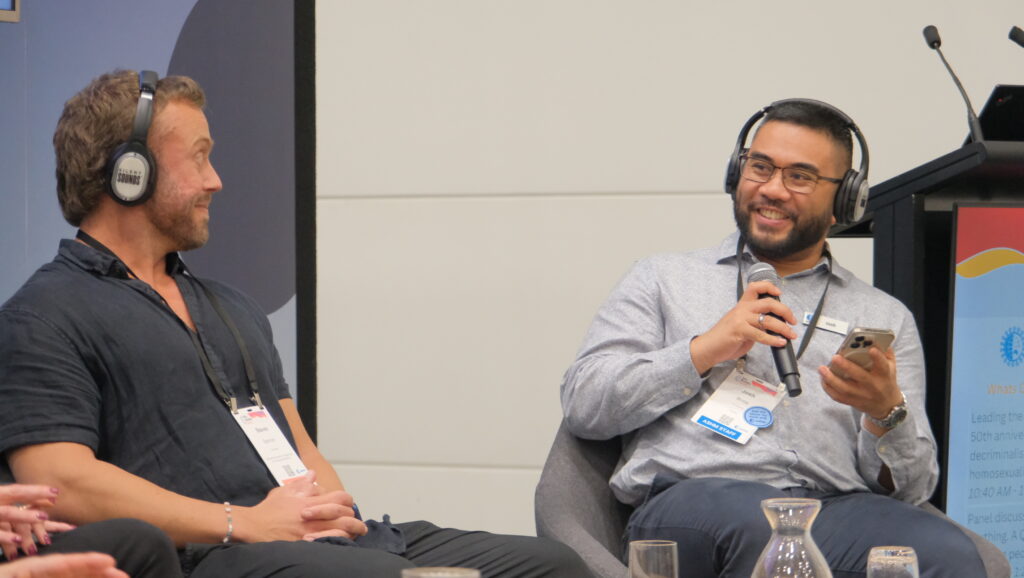
Delivering my first live conference presentation, leading the “Ask Us Anything” session at this year’s HIV&AIDS Conference, demonstrated the appetite within the sector to confront the uncomfortable. Clinicians showed up ready to hear about stigma, bias, and discrimination – not as abstract concepts but as behaviours and experiences that affect real patients in real health care practices. These conversations matter because dismantling stigma requires more than compassion. It requires action.
One practical step you can take right now is to attend the upcoming Ask Us Anything: HIV Edition webinar that will be held on the 4 December at 7:00pm AEDT. This session continues the work of fostering stigma-reducing dialogue by bringing together a diverse panel of people living with HIV made up of a woman, a heterosexual man, a Bi+ man and myself. We are open to sharing perspectives that clinicians may not often encounter in their day-to-day practice, creating an opportunity to deepen understanding and strengthen person-centred care.
But the action must extend beyond clinical care.
Through my work with the Positive Asian Network Australia, the message is consistent: many people living with HIV, particularly migrants, are not primarily seeking clinical support from their peers – they are seeking safety, security, and belonging. Maslow was right: unless the foundations are there, nothing else can hold. For many, stigma and discrimination in their home countries mean that their first experience of safety is here in Australia. But safety is not guaranteed. It must be built, protected, and continually reinforced.
This is where tools like PozQoL are essential. PozQoL is not a formality or a tick-box. It is a bridge – a structured way to connect clinical care with the non-clinical elements that define a person’s wellbeing. It helps clinicians understand where someone is thriving or struggling, not by viral load, but by connection, resilience, stigma experiences, and quality of life. If we are serious about ensuring no one is left behind, then tools like PozQoL must be embedded, valued, and acted upon.
As Scott Harlum said so clearly at the HIV&AIDS Conference in Adelaide in 2025, we cannot afford to be “meek, mild, or polite” when actioning anything about HIV. Lives are shaped by the quality of the care we provide – and by the assumptions we carry. Being reflective requires honesty. Being equitable requires courage. And being committed to “No one left behind” requires sustained effort across clinical, social, and community sectors.
I am proud of the work I’ve contributed to this year, and even more determined to continue pushing our sector toward care that is genuinely safe, culturally responsive, and free from stigma.
Because people living with HIV deserve nothing less.

